Archive for the ‘Abandoned Island’ Category

War & Pieces – The Abandoned Fort Stark

Posted: August 23, 2023 by kingleser in #postaday, Abandoned, Abandoned Attractions, Abandoned Connecticut, Abandoned Forts, Abandoned Island, Abandoned Massachusetts, abandoned military bases, abandoned new england, Abandoned New Hampshire, Abandoned New York, Abandoned Park, Abandoned Pennsylvania, Abandoned Places, Abandoned Prison, Abandoned Rhode Island, Abandoned Tower, Abandoned Tunnel, Abandoned USA, Abandoned Vermont, Abandoned Wonders, Art, Beaches, Broken, Closed, darkness, Death, Destruction, empty, Exploration, Forgotten, Fort Wetherill, Fortress, Forts, Haunting, Hiking, History, Information, left behind, lost, Military, Military Forts, Movies, Mystery, nature, Navy, new england, New Hampshire, Ocean, Ocean View, photography, Preserved Ruin, Public Parks, research, Ruins, seaside, Stories, time, Uncategorized, Urban Decay, Urban Exploration, Urban Exploring, Urbex, writing, WWI, WWII
Tags: , , , , , , , , , , , , , , , , , , , , , , , , , , , , , , , , , , , , , , , , , , , , , , , , , , , ,

War & Pieces

The Abandoned Fort Stark

Written by: Wilk

Photographs by: Lassie

Hello, New Hampshire. It’s been a long time. Three years, in fact. A lot has changed. The global pandemic has mostly come to an end. We’ve grown a bit older. The summer has become hotter. Things aren’t what they used to be. This year has been a crazy one for us for a lot of reasons. And that has honestly been reflected in the kind of places we’ve been exploring. Due to some career changes, both Lassie and myself found ourselves having almost the entire summer off. Something we haven’t really ever experienced before as grown adults. With no school to teach during the summer for her, and SAG-AFTRA on strike for me, we found ourselves with quite a bit of free time these last few weeks. So this has been what we have come to call “The Summer of Madness.” There’s been a lot of spontaneity. There’s been a lot of fun. But most of all, there’s been a lot of traveling. Places we’ve never seen before. Places we’ve always wanted to see. And some places that we haven’t been to in a long time. And that’s where The White Mountain State comes in. If you look at our treasure map here on our site, New Hampshire is the one state here in New England that has only one place on it. Well, this summer, we chose to finally change that.

And so, if you please, allow me to introduce to you the latest addition to the Abandoned Wonders family – the abandoned Fort Stark. Located on the far eastern side of New Castle, New Hampshire, this old warhorse has a long history. Named after local colonial war hero General John Stark, the fort has served a small role in each of The United States of America’s great military struggles. But her purpose has always been clear: defend the Portsmouth Navy Yard and the strategically valuable Piscataqua River. Garrisons and guns crewed the fort during the Revolutionary War, War of 1812, American Civil War, Spanish-American War, World War I, and World War II. But strangely enough, despite her decorated line of service, she never saw combat. I suppose we should all be thankful for that, in one way or another. As the tides of war turned cold, the watchful guardian Fort Stark was deactivated in 1948. Her main guns found new homes in more hostile parts of the world and the grounds were turned over to the US Navy. Though they spent some time as a training center for reserve forces, the fort’s fate was more or less sealed. In 1983, the state of New Hampshire took control of the grounds and the once great Fort Stark was no more.

And so in the waning days of summer 2023, we had yet another spontaneous trip. On a Sunday afternoon we randomly got an invite to visit some family up north, and two hours later we were in New Hampshire. Believe it or not, abandoned places are rather scarce up in The White Mountain State. There are plenty of abandoned farm houses and factories lost to the wilderness. But few of these places have a story. And if you know anything about us here at Abandoned Wonders, it’s all about the story for us. We chose this place because it’s honestly been a long time since we covered anything military related. Having seen so many Nike Missile Sites during our early years, military stuff just got boring after a while. We figured now was a good time to revisit the subject. So, with a couple family members tagging along with us, we set out on our trek to the abandoned Fort Stark. On our drive over, we just happened to pass by the legendary “Alcatraz of the East”; aka the abandoned Portsmouth Naval Prison. Haunting in her majestic beauty, we may be coming back this way someday to see her more up close. We’ll see…Anyway, the remains of the fort sit right alongside a moderately trafficked beach and recreational area.

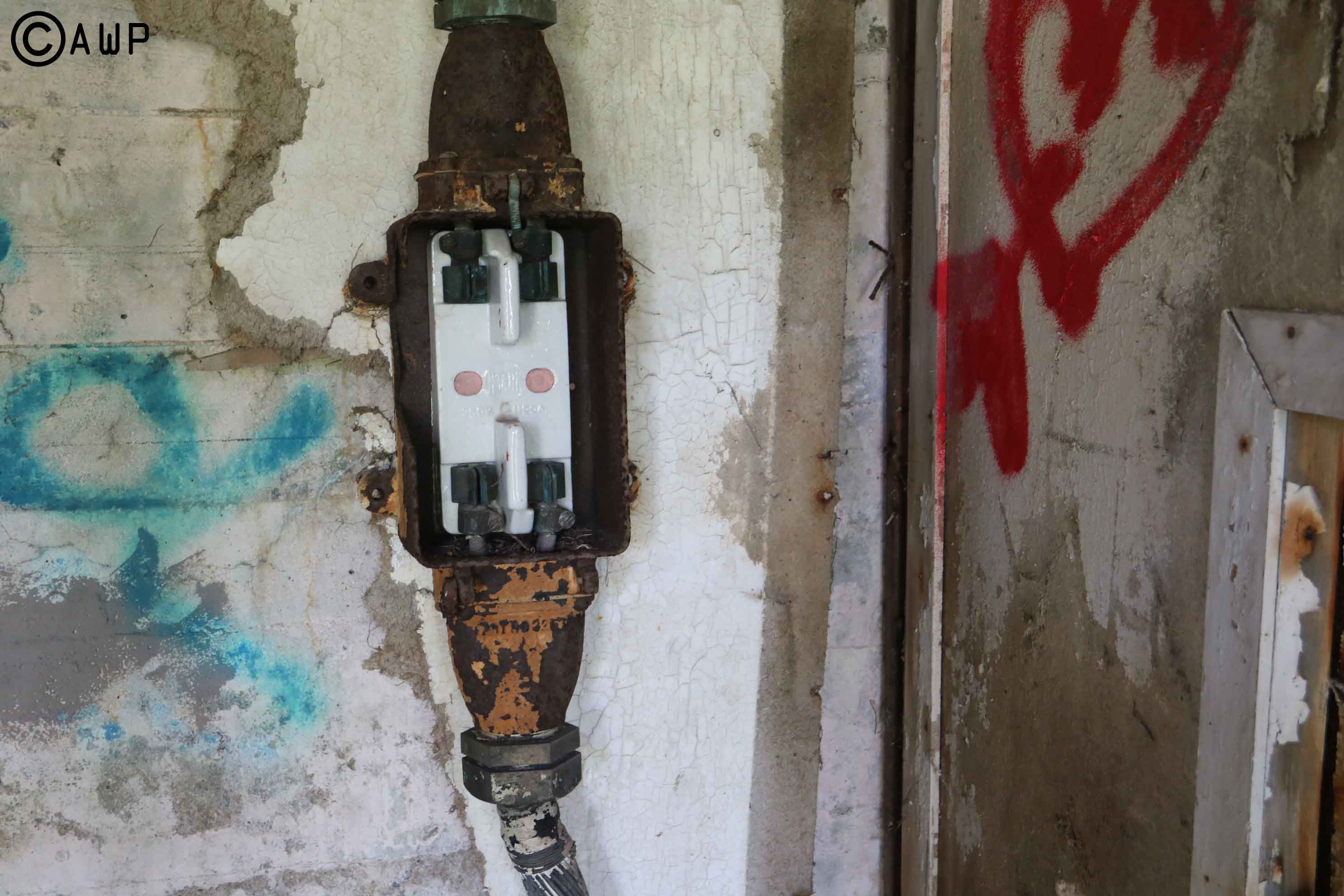
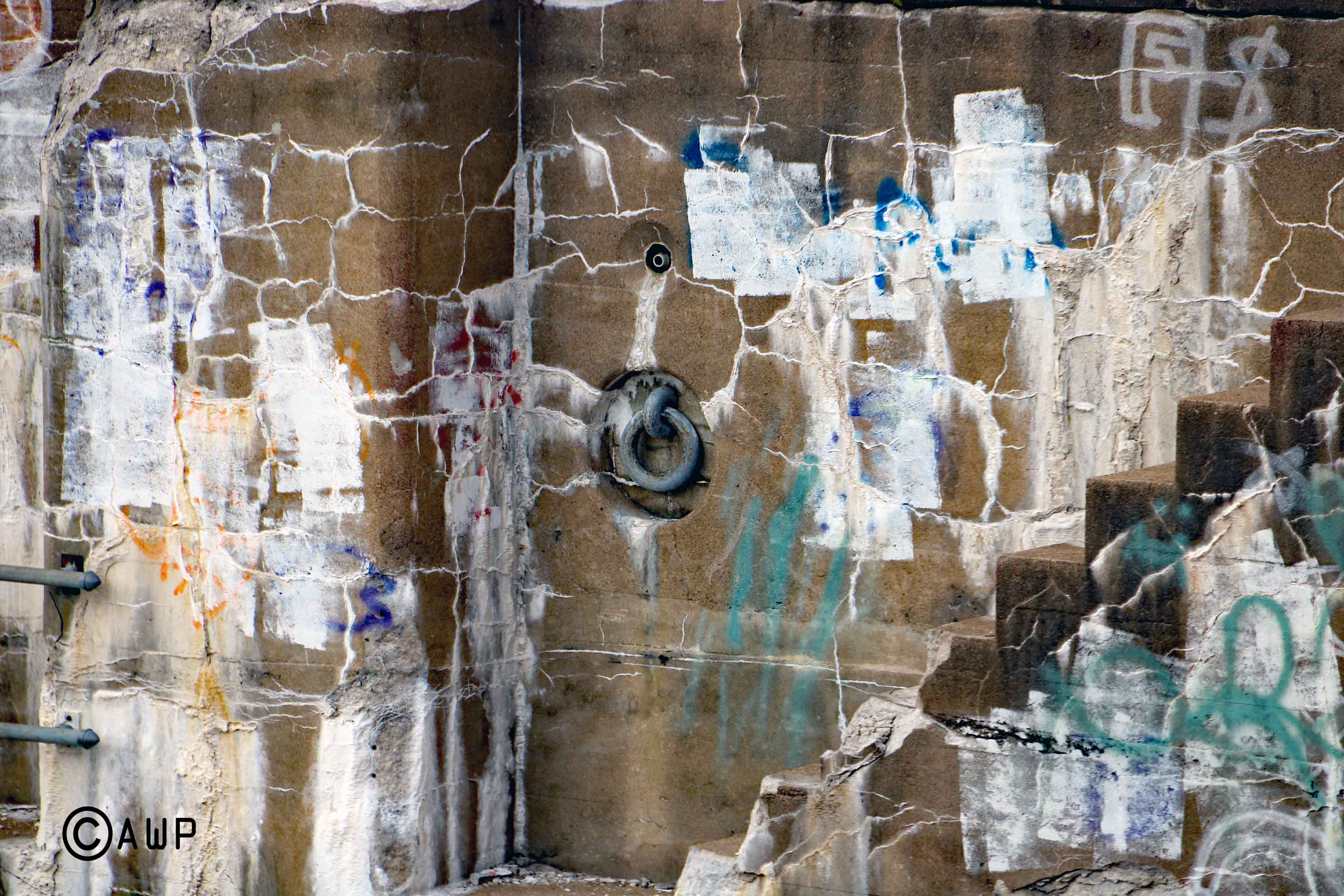
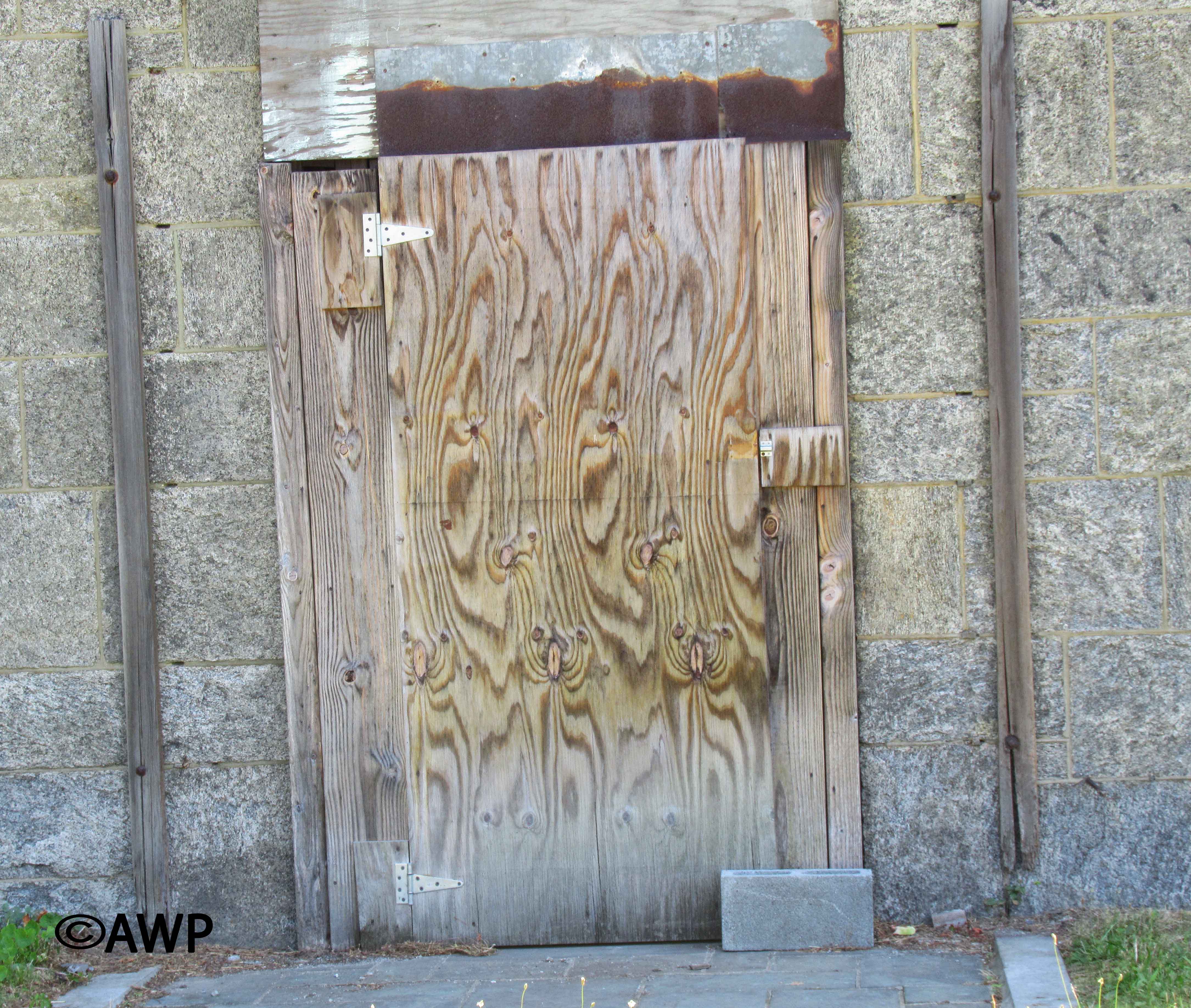
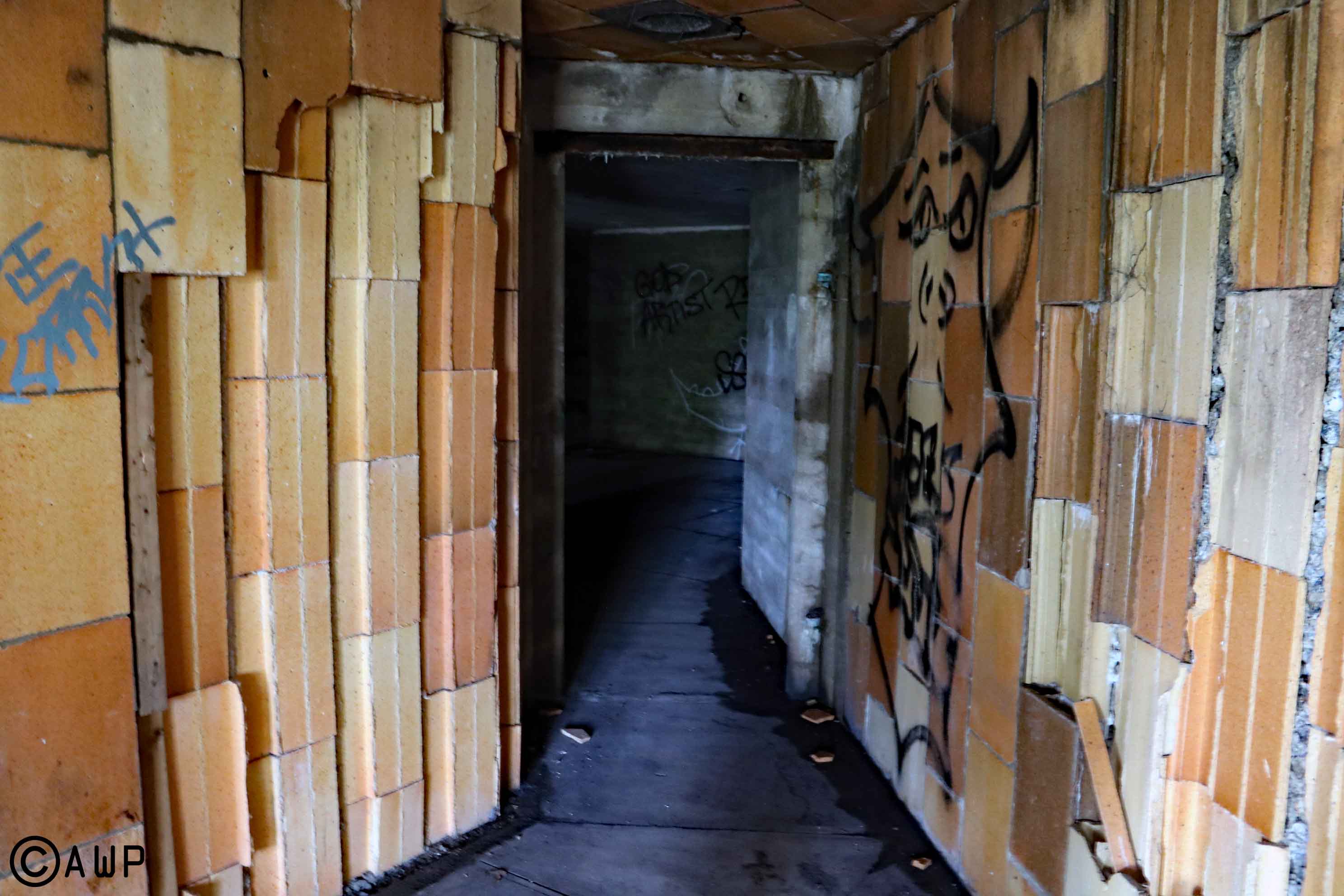
There is no long hike or hunt for this one. Much like many other abandoned coastal artillery sites that have been converted to recreational areas, you just drive up to the parking lot and there’s your target. When the state took control of the grounds, Fort Stark was modified just enough to make it safe for the public. So basically the only things left are those that were too expensive to demolish. At the center of the grounds is the old Harbor Entrance Control Base, installed prior to World War II. It is an austere layered building with a grim white paint job. The main battery sites, Battery Hunter and Battery Lytle, sit on either side of the base. Each is in a varying state of decay and has a pillbox-style lookout post at the top. While most of Fort Stark is fenced off, these fences honestly don’t do much. Almost every single one has a gaping hole in it, making the fort completely accessible. Strangely enough, wherever there is a whole in the fence, one of the fort’s heavy steel doors is often busted open. There are multiple dark passageways leading deep into the underbelly of the old base. Some rooms still have their unique features, such as a brick fireplace, left behind. Other are simply black voids or passageways leading to nowhere.

In all honesty, there is not too much to see here. Unless you’re a military history buff, I honestly wouldn’t recommend a visit to Fort Stark. Though the tunnels are quite interesting and certain areas of the fort are well preserved, this place is sadly a shadow of its former self. Leo Tolstoy once famously said, “the strongest of all warriors are these two: Time and Patience.” And while the cruel hands of time have regrettably run roughshod over the fortress, her patience has paid off. Though she never saw combat, Fort Stark clearly served her purpose with honor and dignity. The grounds may be crumbling, but the people she once protected now get to enjoy her beaches with their families and friends. The concept of war may never change, but the ways in which we fight it continue to evolve. In the days of nuclear arsenals and cyber-warfare, places like Fort Stark have more or less outlived their purpose. Her days of standing guard and keeping a weather eye on the horizon are over. Rest now, fallen soldier. You stood without fear in the face of countless enemies. You defended the gates of New England during all times of war. You followed any and all orders you were given with the utmost loyalty. And for that, we salute you.
Concrete Jungle Cats – The Abandoned Roosevelt Island Smallpox Hospital

Posted: June 29, 2022 by kingleser in #postaday, Abandoned, Abandoned Attractions, Abandoned Castle, Abandoned Connecticut, Abandoned Forts, Abandoned Hospital, Abandoned Island, Abandoned Massachusetts, abandoned new england, Abandoned New Hampshire, Abandoned New York, Abandoned Park, Abandoned Pennsylvania, Abandoned Places, Abandoned Prison, Abandoned Rhode Island, Abandoned Tower, Abandoned USA, Abandoned Vermont, Abandoned Wonders, Art, Beaches, Bird Watching, Birds, Children's Hospital, Closed, darkness, Death, Destruction, empty, Exploration, fire, Forgotten, Forts, Ghosts, Haunting, Hiking, History, Information, lost, Movies, Mystery, nature, New York, Ocean View, photography, Preserved Ruin, Public Parks, research, Ruins, Stories, time, Uncategorized, Urban Decay, Urban Exploration, Urban Exploring, Urbex, writing
Tags: , , , , , , , , , , , , , , , , , , , , , , , , , , , , , , , , , , , ,

Concrete Jungle Cats

The Abandoned Roosevelt Island Smallpox Hospital

Written by: Wilk

Photographs by: Lassie

Hello, New York City. It’s been a long time. Too long, in fact. And while we personally haven’t seen you since the start of the pandemic, this is your first appearance on our site. We’ve covered abandoned places in Hartford, Boston, and Philadelphia. But we’ve never done something in the City that Never Sleeps. I guess it was just a matter of time, I suppose. We just happened to be in town for the Tribeca Film Festival supporting a movie I was in. I figured, what the Hell? Let’s find something derelict to cover for the website. But the funny thing is abandoned places are actually pretty hard to come by in New York City. Especially around Manhattan. Given the property values and the high demand for space in the ever growing metropolis, abandoned places never stay that way for long. A business may go under, or a service may lose its funding, but their grounds are usually repurposed and redeveloped very quickly. Some even become tourist attractions. There were definitely a few more interesting places we could’ve covered in the city. But since we were far from home and there to promote a movie, we kind of played things a little safe this time. And besides, this is the place that spoke to us the most.

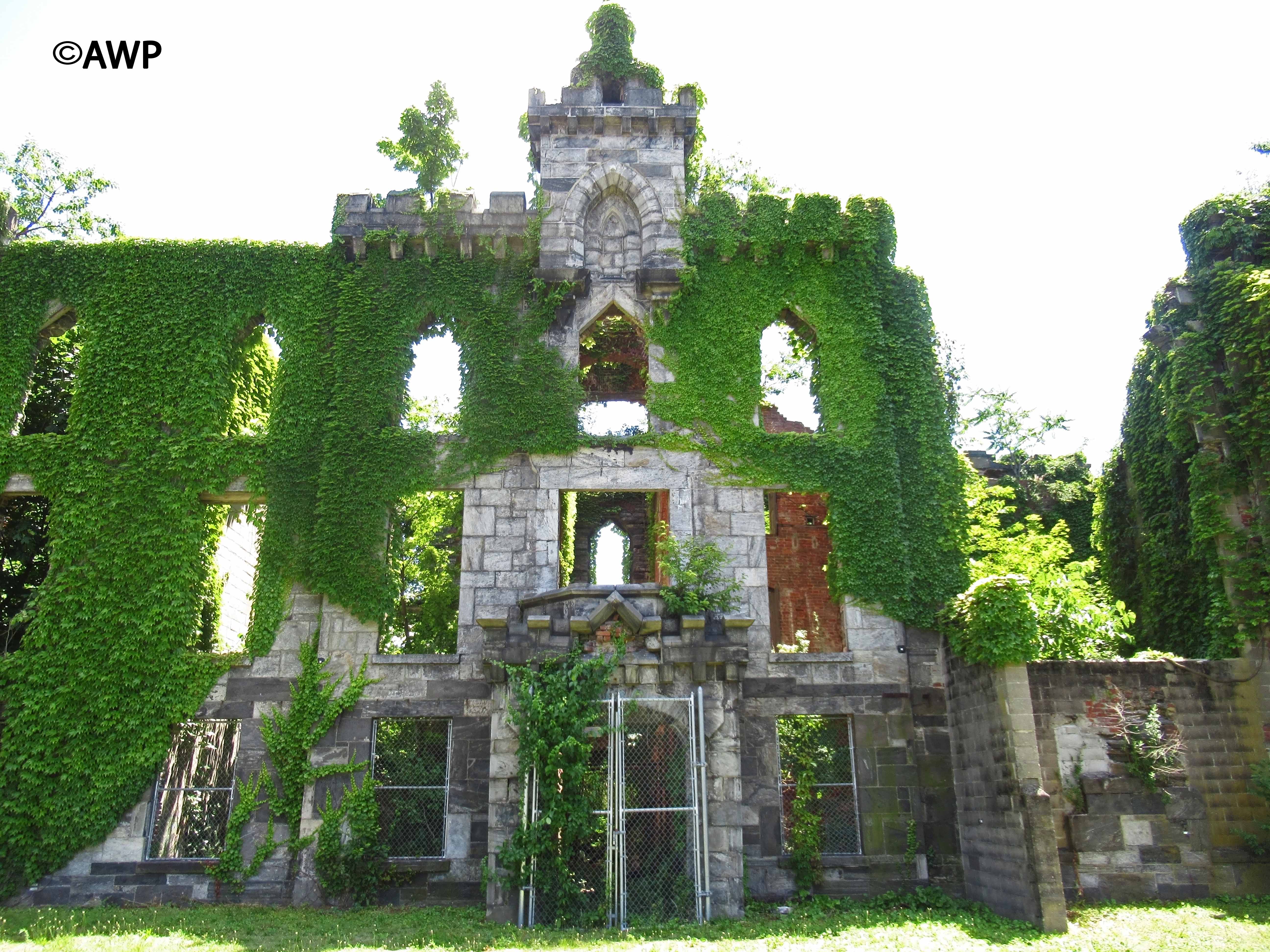
And so allow me to introduce you to this quarter’s subject: the abandoned Roosevelt Island Smallpox Hospital. Also known as the Renwick Smallpox Hospital, after its architect James Renwick Jr. It is located on Roosevelt Island, formerly known as Blackwell’s Island and Welfare Island, which is a long and narrow piece of land in the middle of New York City’s East River. The hospital was first opened in 1856. Its main purpose was to fight large outbreaks of smallpox by quarantining patients, mostly poor immigrants, in this more secluded area of the city. But this was not to last. Due to patient overcrowding, it was eventually converted into the Maternity and Charity Hospital Training School, in partnership with the nearby City Hospital. Also located on Roosevelt Island. For a few decades more, this old gothic beauty served her new purpose. But with the changing times and the island’s isolation, the facility eventually fell into disrepair and was forced to close its doors for good almost one hundred years after its opening. For years, the grounds slow succumbed to their abandonment as the buildings collapsed and wild ivy took over. The ruins reside in what is now known as Southpoint Park on Roosevelt Island.

See, if this place were anywhere else, it would just be an interesting looking ruin. Nothing more. But there are two things that set the abandoned smallpox hospital out from all other places nearby. One: it is the only still standing ruin within the city limits to be listed with the National Register of Historic Places. And two: the Wildlife Freedom Foundation. For reasons yet to be explained, Roosevelt Island has become a haven for New York’s feral cat population. Some are believed to be strays who have found their way across the river. Others are said to have been dumped there by their cruel owners who no longer want them. But whatever the reasons, there is now a small population of cats residing here. And their base of operations just happens to be the abandoned Smallpox Hospital. In 2005, a group of volunteers came together to start the Wildlife Freedom Foundation. They worked to spay, neuter, and take care of the feral cat population as best as they could. A small sanctuary has been created right outside the hospital grounds where the cats are able to come and go as they please, with valiant volunteers providing them with food and shelter. They even adopt out cats that have been successfully rehabilitated.

Since Roosevelt Island is, in fact, an island, there are only a few ways to get to it. There is a bridge for vehicles coming in from Queens. There is a single Subway stop. There is the NYC Ferry System. And there is the historic Roosevelt Island Tram, which carries visitors across the East River in big red gondolas. We, of course, chose the tram. Unfortunately, one of us is afraid of heights. I’ll give you a hint: it’s not me. Luckily Lassie was a real trooper going across the whole five minute ride. The abandoned smallpox hospital resides on the southern side of the island. Though the island provides a free shuttle service, we decided to make the trek to the abandoned hospital on foot. After a short walk, we eventually came upon the ruins. The ornate stone structure still retains its strong gothic feel, even whilst covered head to toe in ivy. It is also almost completely sealed in with chain link fencing. Almost, that is. Inside, the floors are all gone. Certain doorways and windows have been boarded up with archaic plywood. The bright summer sun pours in through the roof like a joyful flood. There’s not too much to see here. But what is there to see is really quite interesting. Especially with the bright Manhattan skyline as a backdrop.

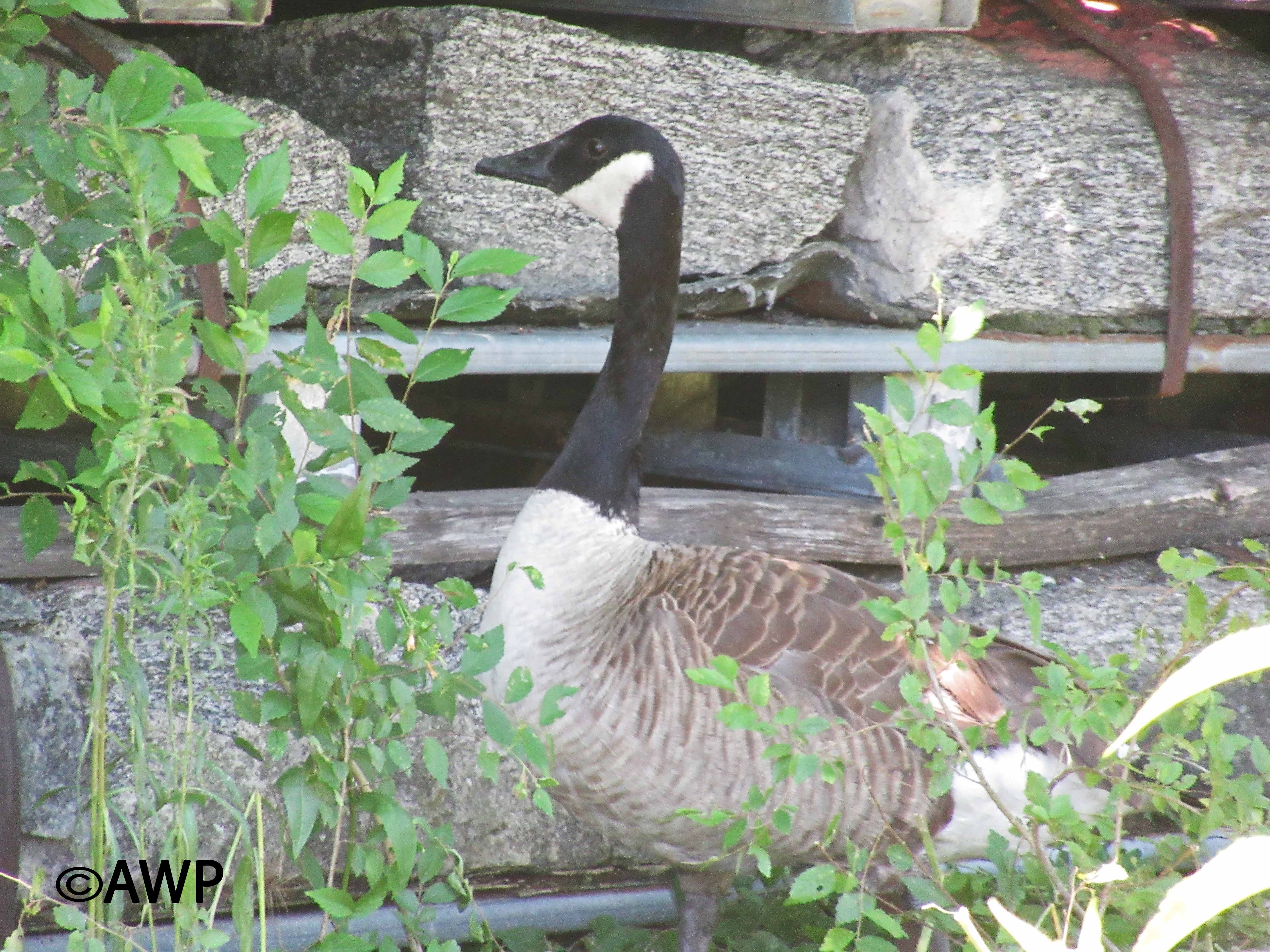
It didn’t take long for us to see the first wild cat. Though they are very difficult to photograph, they are easy to spot. They dart in and amongst the underbrush near and within the grounds of the abandoned hospital. After finishing up with our investigation, we stopped over at the nearby Roosevelt Island Cat Sanctuary. Though the volunteers were quite busy, they did graciously let us in to meet the cats and tell us a little more about their program. They currently have over twenty cats under their care, though we were told the cats spend most of their time within the abandoned hospital “doing their investigations.” And it turns out, the cats aren’t the only guests of the Wildlife Freedom Foundation currently residing on the island. A large congregation of Canadian Geese, many of whom had injuries, were nesting in and around the grounds. The shelter volunteers also proudly told us that they will soon be taking in two baby opossums for rehabilitation. It warms my heart to see a place like this nestles amongst one of the biggest cities in the world. It just goes to show that you may be able to take the cat out of the jungle. But you can never take the jungle out of the cat. Even if that jungle is made of concrete.

If you are interested in volunteering for, donating to, or adopting from the Wildlife Freedom Foundation, please do check out their official website here – https://www.wildlifefreedomfoundation.org/

Flight of Dragons

The Ruins of Bannerman Castle

Written by: Wilk

Photographs by: Lassie

We have been doing this urban exploration thing for over five years now. We have explored places all over New England. We’ve seen the abandoned hospitals of Connecticut, the derelict fortresses of Rhode Island, the lost ski resorts of Vermont, and the forgotten landmarks of Massachusetts. New England has always been our base of operation. But this past autumn, we finally headed west to the Empire State. New York is a place that we have visited a few times lately on movie business, mostly in the city. But we had never done any exploring there. Technically, it’s almost closer to us than a lot of the places we’ve already visited. For some reason, it was just a place that seemed to have evaded us over the years. And so, for our eight year anniversary we finally decided that it was time to see what the great state of New York had to offer. Our first destination? Bannerman Castle.

Of all the places in New York, it was the Hudson River Valley that caught our attention the most. Bannerman Castle is kind of a local legend in these parts. Oddly enough, the local inn we stayed at on our trip had dozens of paintings of the castle all throughout their foyer. Located on Pollepel Island, smack dab in the middle of the roaring Hudson River, the castle was first built in 1901 by industrialist Francis Bannerman IV. Making his fortune in the scrap business, Bannerman is unofficially known as “The Father of Gun Collecting.” When he was prohibited from housing his large stockpile of ammunition in New York City, Bannerman moved his base of operation upriver to the nearby island.Though the main castle was built as a housing facility for his vast arms and munitions arsenal, the island was also the vacation home of the Bannerman family. Following Francis’s death in 1918, the castle went through a series of unfortunate events including fires, accidents, and architectural collapses. The island was named off-limits in 1969.

Since its closure, Bannerman Castle has slowly deteriorated. It’s once grand presence now haunts the Hudson River Valley. But in recent years, the local community has come together to bring it back to life. Through the Bannerman Castle Trust, certain buildings have been restored and the castle itself stands in a state of arrested decay. Much like Chester-Hudson Quarry in Massachusetts, the castle is maintained just enough to keep it from collapsing. This allows people from all over the world to experience its sheer beauty. The castle was even featured in the most recent Transformers movie. The trust offers tours of the island in the summer and fall via ferry or by kayak (for the summer only). We were lucky enough to catch one of the final ferry tours of the season. Taking a small boat through the roaring Hudson River, the castle looms like a mythical giant in the distance. It beckons all weary travels towards its once rich gateways.

Honestly, the castle is damn near awe-inspiring. Against the gorgeous backdrop of the Hudson River Valley around it, the faded red palace looks like something out of a fairy tale. It almost looks as if it were hewn from the very mountains by great giants of old. While the front of the castle still looks amazing, the back is in much worse shape. It looks like it could collapse at any moment. To create a barrier for his island, Francis Bannerman sunk several large barges around it topped with small stone towers. A few of these still peak out from the river’s roaring current. Unfortunately, seeing this place is much more tourism that it is exploration. We were on the island for a grand total of about an hour, and did not get to see the castle as up close as I would have liked. Guides ferry visitors to and fro across the island like sheep. Nothing against them or the Bannerman Castle Trust, I just would’ve preferred seeing the place on our own as opposed to in a group. This was definitely a very different experience than we are used to.

I almost didn’t write about this place for our site. I don’t really know why. It just didn’t really fit in with what we usually cover. Like I said before, this place is much more in line with Dark Tourism than it is urban exploration. But Bannerman Castle truly is amazing to see. I’d highly recommend it for anyone who enjoys a little adventure. Plus you get to go on a boat ride through the Hudson River. Even if you don’t take the island tour, seeing it from the banks of the river or the top of nearby Mount Beacon is bloody breathtaking. Much like Hearthstone Castle, it feels like something from a dream. Yet as awesome as Bannerman Castle is, I couldn’t help but imagine what it must’ve been like during its heyday. Walking across the island was just as cool as it was somber. The dragons that once ruled this magical place have long since flown off. And yet, somehow, the castle has captured the hearts and minds of the local community. She may never again rise to her former glory. Yet with a little help, she still stands tall.

If you are interested in visiting the castle, please check out the Bannerman Castle Trust’s website here – https://www.bannermancastle.org